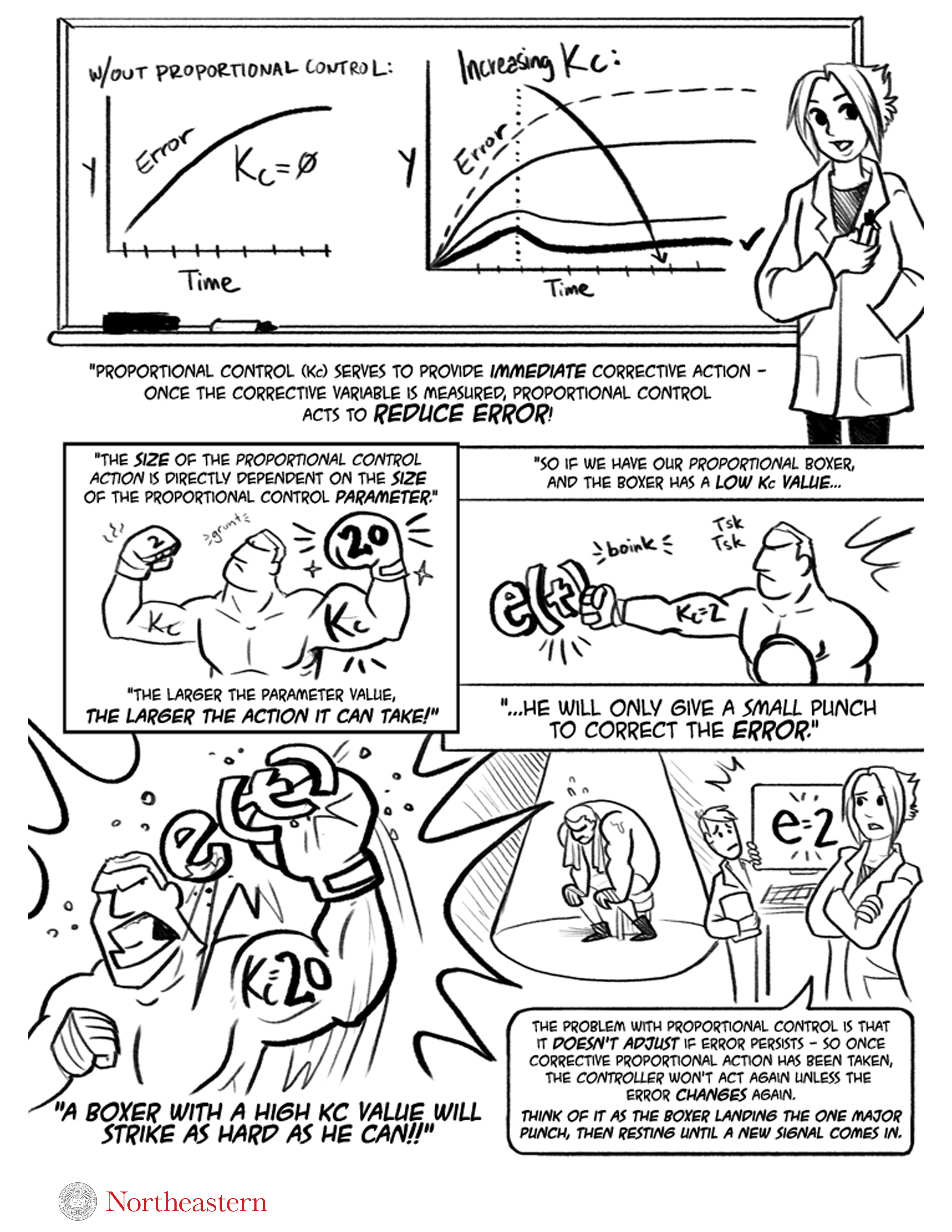
Engineering Education
Background
In 2023 I joined the "Science the World" research group led by Professor Landherr at Northeastern University. The group's focus is on addressing systemic disparities in higher education by developing accessible, engaging educational materials — specifically for students who don't see themselves represented in traditional STEM pedagogy.
The approach combines three formats: low-cost experimental demonstrations that can be replicated without expensive lab equipment, interactive virtual simulations, and art-driven educational comics. The project is funded by a $300,000 NSF grant supporting the development of open-access materials across 16 chemical engineering subject areas.
Objective
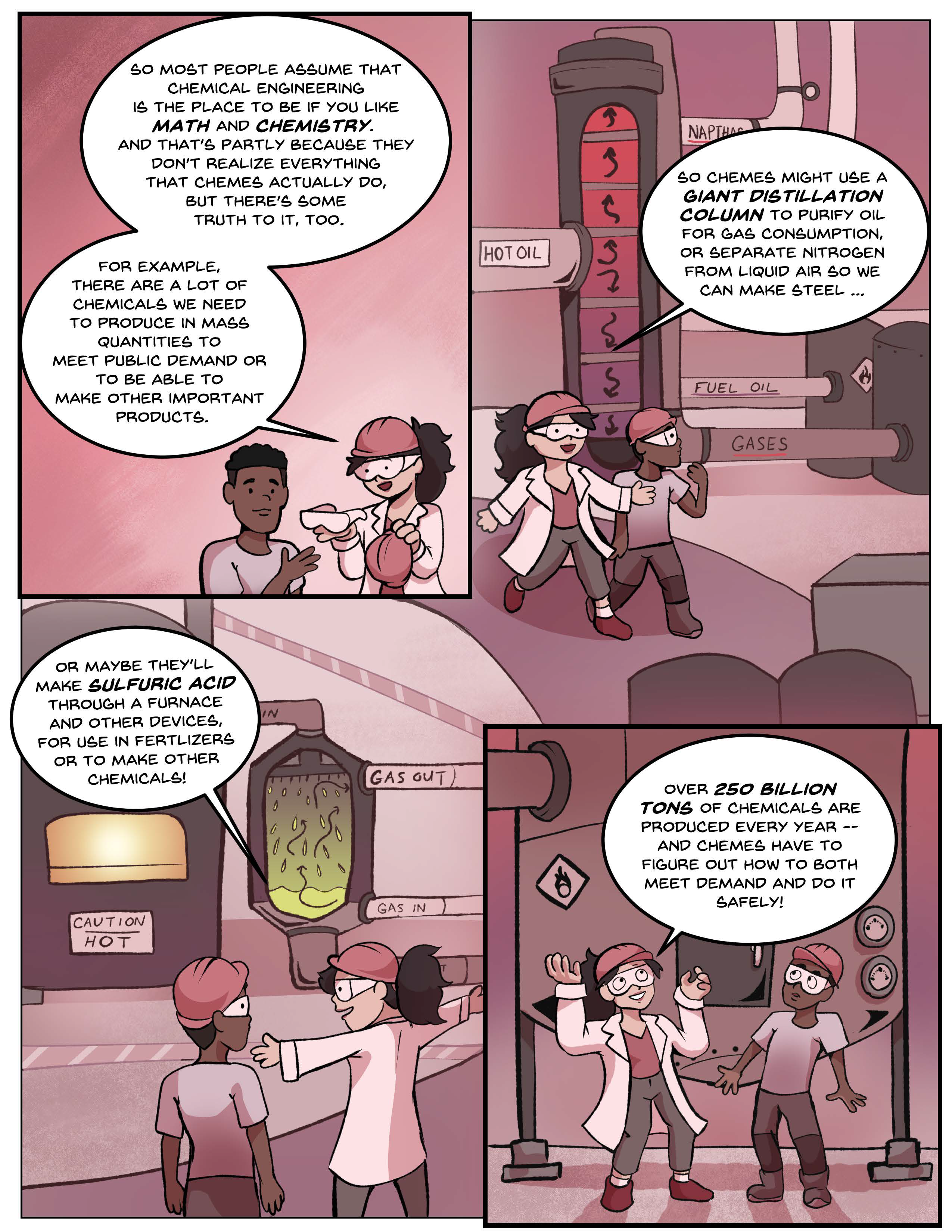
The central challenge in chemical engineering education is making abstract mathematical relationships feel intuitive. Topics like thermodynamics, phase equilibria, and material balances require students to simultaneously understand physical concepts and manipulate complex equations — a cognitive load that loses many students who might otherwise thrive.
The comics format is an unusual choice for technical content, but a deliberate one. Visual storytelling can carry conceptual intuition in ways that equations and diagrams alone cannot. The goal is not to replace rigor but to lower the barrier to entry — giving students a mental model before they encounter the formalism.
My Role
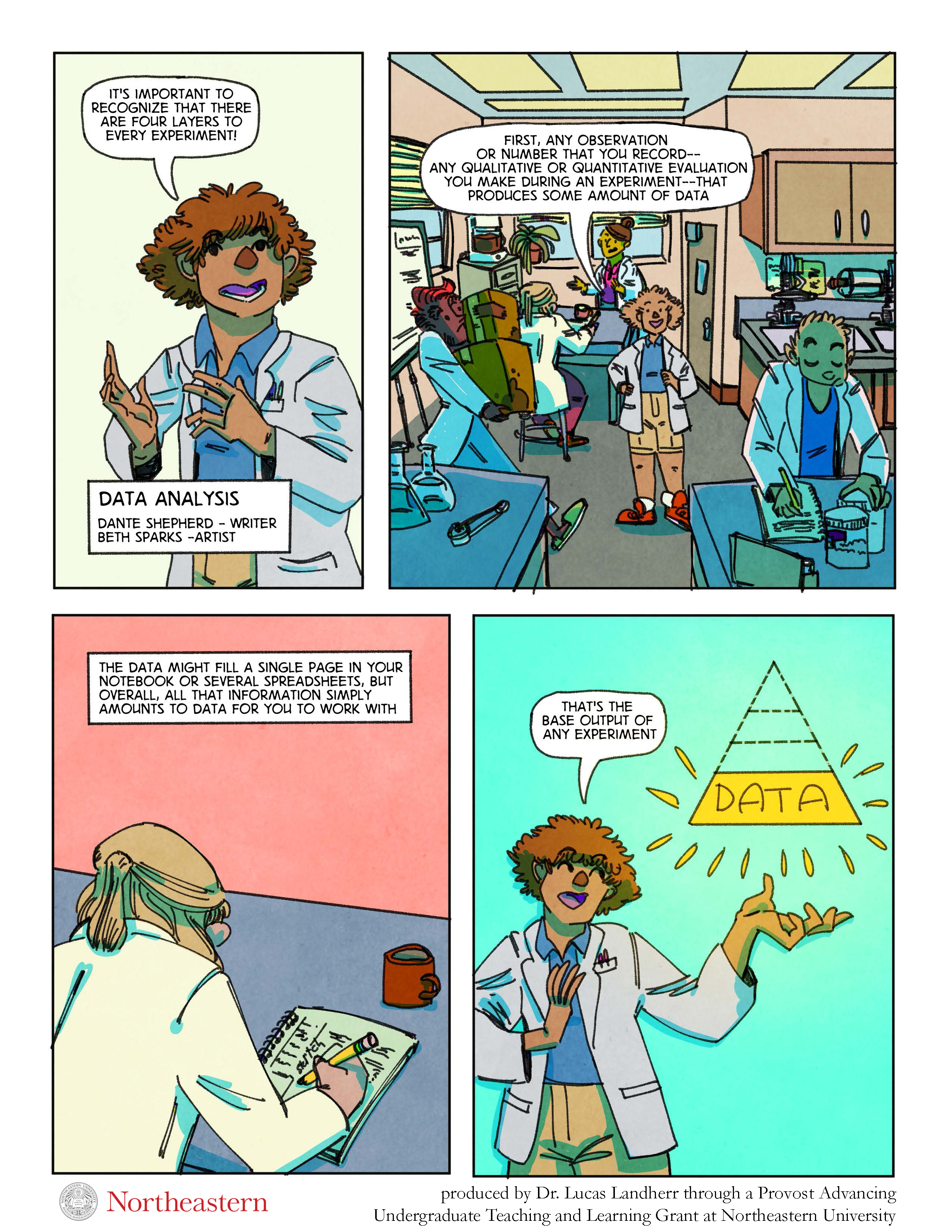
I wrote the script for the atom balance comic — one of the foundational topics in the curriculum. The challenge is twofold: the conceptual explanation must be genuinely clear and memorable, and the worked mathematical examples must be accurate and complete enough to serve as a study reference.
The script went through several rounds of revision to balance narrative flow against technical precision. It is currently in the final stages of editing before being handed off to the artist for illustration.
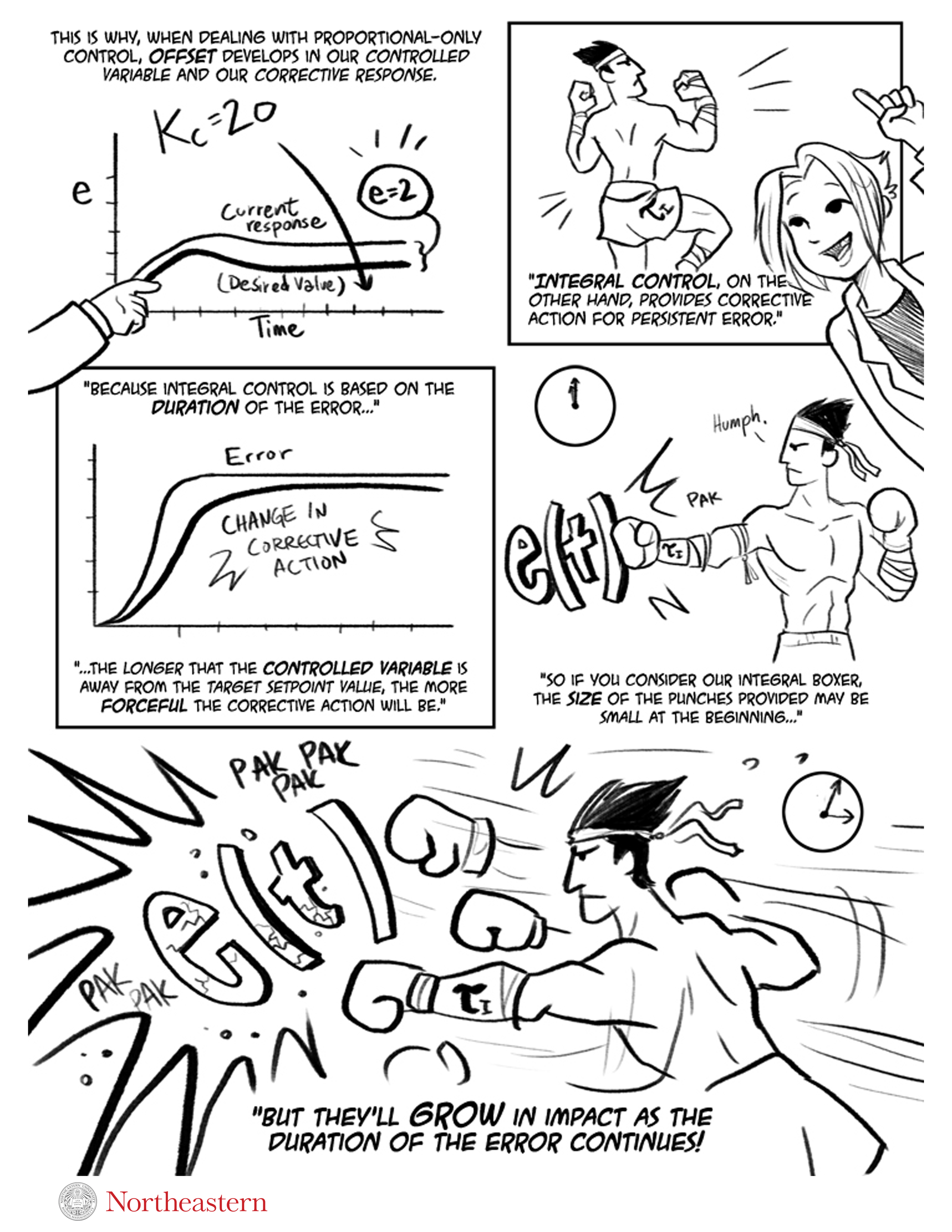
The project also has an explicit DEI commitment built into its design: characters are intentionally non-traditional, and the narratives are constructed to reflect the breadth of people who belong in engineering — not the narrow archetype that currently dominates the field's self-image.