Mycoprotein Production
Introduction
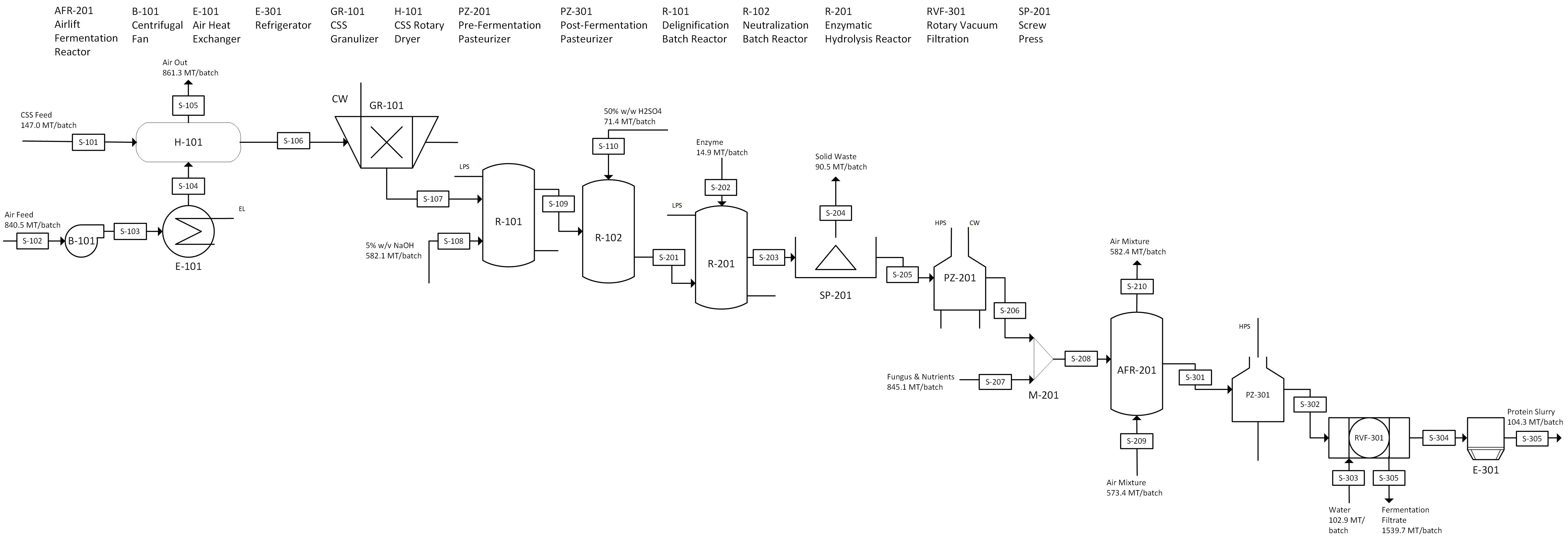
This was my capstone design project at Northeastern University, completed as a team of five chemical engineers. The task: design and validate a full-scale industrial process to sustainably produce edible protein using microbial fermentation — from feedstock selection through final product, including economic analysis.
Why This Matters
Global population is projected to reach 9.7 billion by 2050. As of 2019, roughly 150 million people experience profound protein malnutrition. Conventional animal agriculture cannot scale to meet this demand sustainably — it requires enormous water inputs, generates significant greenhouse gas emissions, and consumes land at a rate that is not compatible with habitat preservation.
Mycoprotein produced via microbial fermentation is one of the most promising alternatives. It is nutritionally complete, can be produced continuously at industrial scale, and has a dramatically smaller environmental footprint than animal protein. The technology exists — the question is whether it can be made economically viable.
A Novel Idea
Current industrial mycoprotein processes use refined sugar as their carbon feedstock — a food-grade input that competes with human consumption and carries significant cost. Our team proposed replacing it with coffee silver skins (CSS), an agricultural waste product generated during coffee bean roasting.
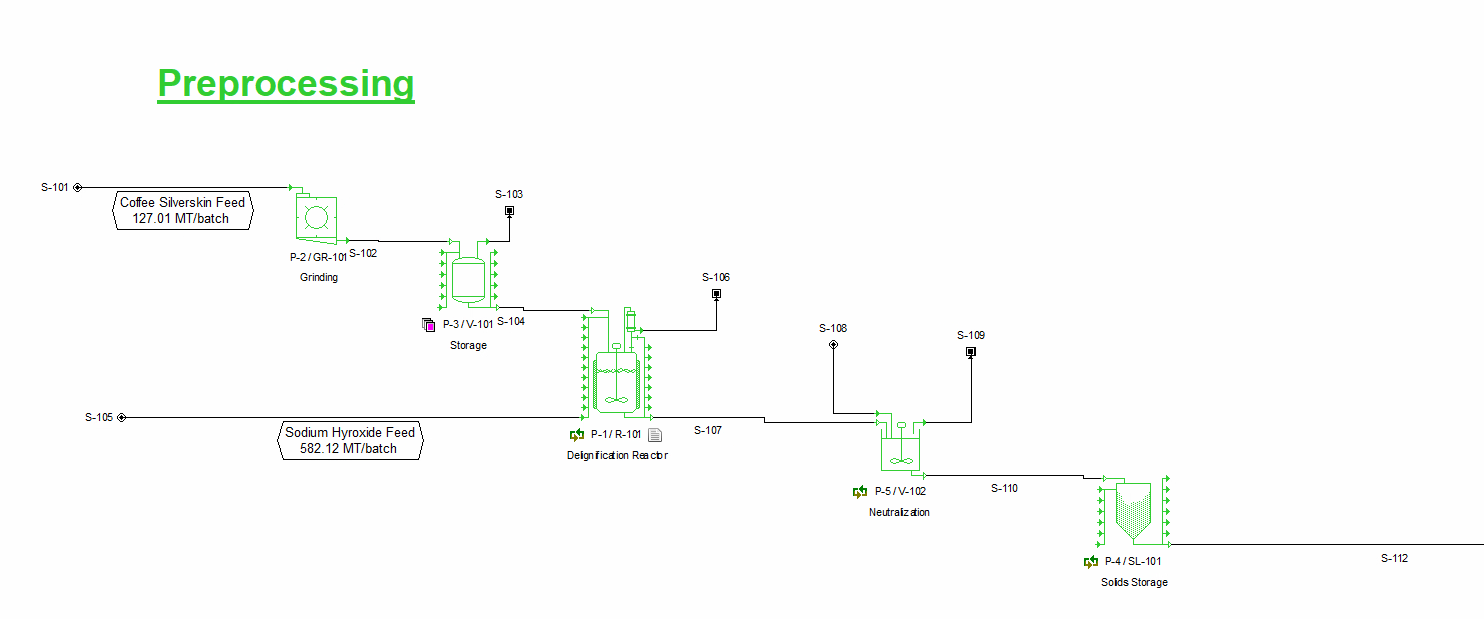
CSS has several properties that make it unusually well-suited for this application. It is exceptionally pure compared to other agricultural waste streams, making batch control tractable. It is rich in cellulose and hemicellulose polymers that can be hydrolyzed into fermentable sugars. And it costs nothing — roasters currently pay for disposal, and over 8,300 tons are produced annually in the US alone.
Saccharification of CSS has been studied academically. Mycoprotein fermentation occurs commercially. The combination had never been demonstrated at industrial scale, which made it a genuinely novel engineering problem.
Development & Deliverables
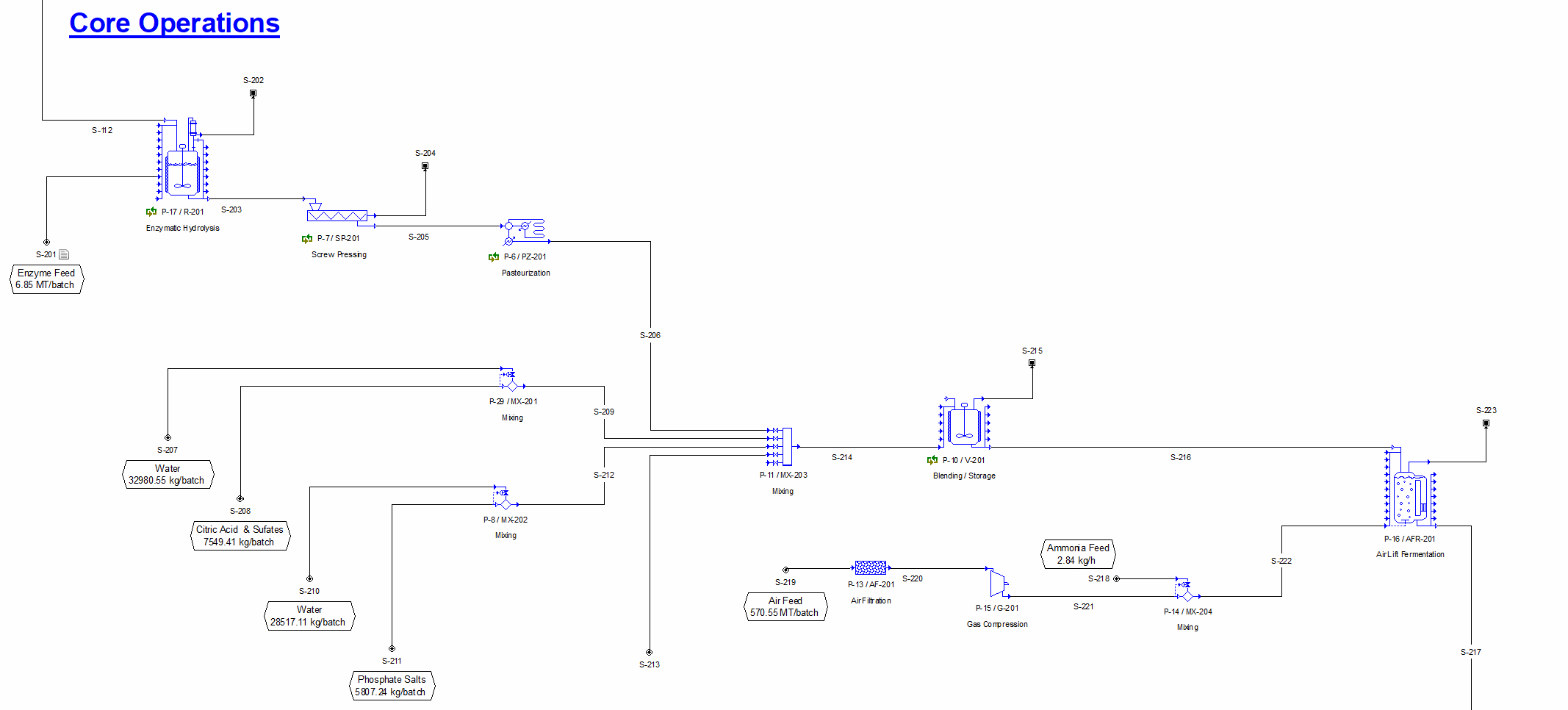
The team coordinated through Gantt charts and weekly technical memos, and met with industry professionals at multiple points during design. We developed both experimental and computational proof of concept, using AspenTech for process simulation and economic modeling.
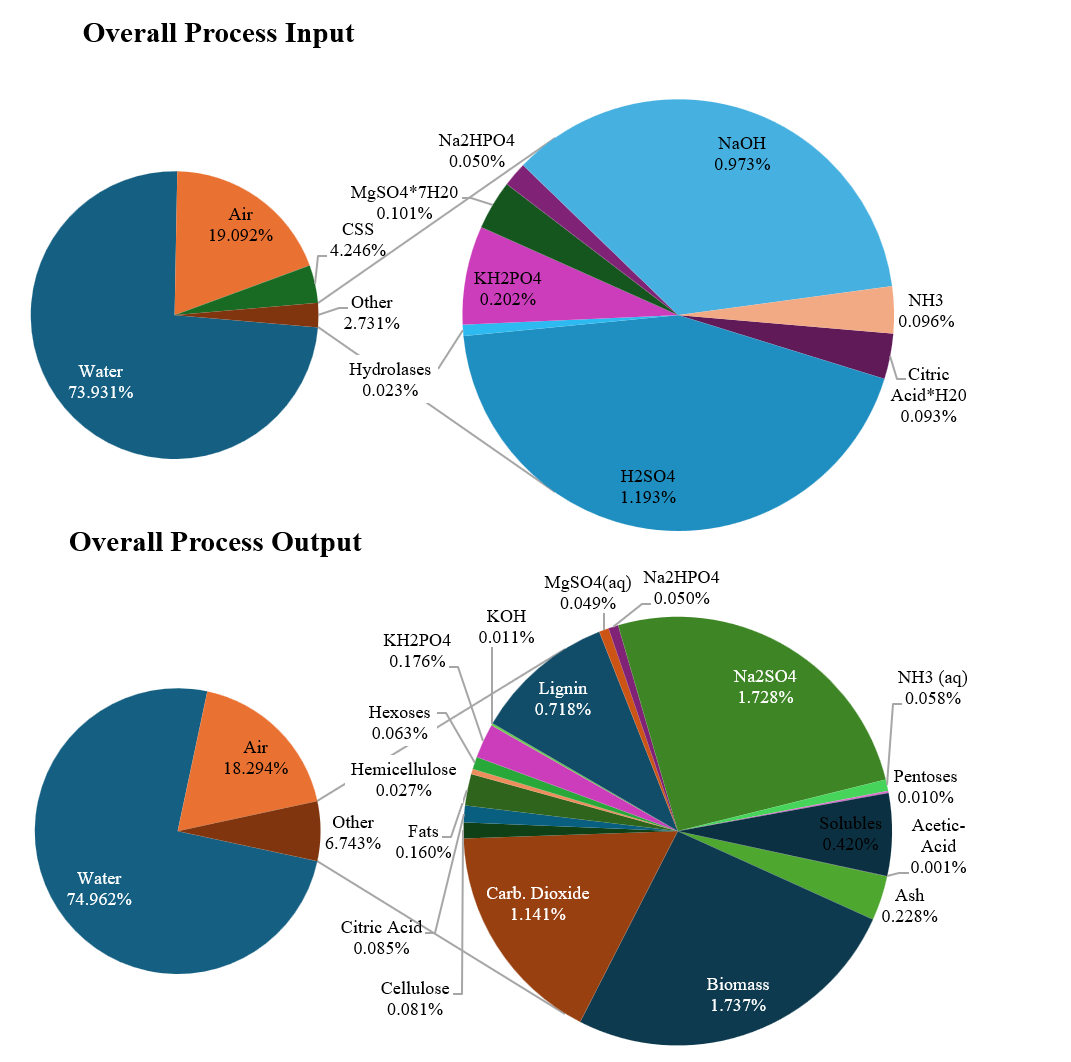
Our findings showed that a plant at the proposed scale is not economically feasible under current market conditions — the capital and operating costs outpace revenue at any realistic protein price point. However, the analysis also identified the specific bottlenecks and highlighted several process modifications that could meaningfully shift the economics. The work was presented at a public symposium and compiled into a final technical report.
Acknowledgements
Team: Shreyas Ravichandar, Thomas Gnann, Firas Zarrouk, Andrew Larocque. Lab access provided by Dr. Kate Honda. Industrial mentorship by Christopher McLaughlin. Faculty advisors: Professor Courtney Pfluger, Mike Smith, and Professor Benjamin Woolston.